
Nina Frölich: Research Stay at Rhodes University, South Africa
_rdax_1240x919.png)
From May to June 2026, I spent a two-month research stay at the Institute for Water Research (IWR) and the Department of Environmental Studies at Rhodes University in Makhanda, South Africa. The stay was closely linked to my doctoral research on transdisciplinary sustainability research, which investigates how different forms of knowledge can be integrated across cultural and institutional contexts and how successful sustainability approaches can be strengthened and adapted beyond their original settings.
The main objective of the stay was to explore how scientific institutions from different regions of the world can learn from one another and strengthen the impact of transdisciplinary, community-based approaches to sustainable development.
My stay started with my participation in the International Community Engagement Conference, where I presented a paper on Global South-North university partnerships and had the chance to make first connections with the context, people, and the research. Following this event, I participated in a range of academic and practical activities. These included introductory meetings with researchers and students at Rhodes University, attendance at seminars, and facilitations of workshops on data ethics and amplification. I also conducted interviews with academic and community members involved in a local sustainability initiative and visited several sites in town and the Eastern Cape region to better understand local environmental and social sustainability challenges.
The stay led to several important research outcomes. One jointly authored publication developed during the collaboration is currently under review. A second publication, co-authored with colleagues from Makhanda and Mexico City, is in the final phase of data collection and is expected to be submitted soon.
Beyond these concrete contributions to my doctoral research and international network, the stay also had a profound personal impact. Through direct engagement with researchers, students, practitioners, and community members, I was able to experience first-hand the social, environmental, and institutional realities that shape sustainability challenges and responses in the South African context. Visiting project sites, participating in local discussions, and learning from diverse perspectives provided insights that could not have been fully gained through literature alone. These experiences deepened my understanding of the importance of context in transdisciplinary sustainability research and challenged me to reflect critically on assumptions, research practices, and knowledge systems.
Lastly, the research stay strengthened existing international partnerships and established a foundation for continued collaboration. The project partners from South Africa, Mexico, and Malaysia meet again in Karlsruhe in October 2026 to continue discussions on North-South and South-South partnerships and to further develop joint research activities.
Carolina Alvarez: Research Stay in Paris and Colombia
_rdax_1240x478.png)
My research trip to Paris and Colombia gave me a platform to deepen my knowledge and contrast it with other perspectives from people in the field. As a Colombian architect and scholar, I speak from a unique position that shares commonalities with Germán Téllez, but also as a young researcher immersed in a European context, I can bring nuances to mere documentation approaches commonly applied to Téllez's work. The trip had two parts: first, attendance at the In-Discipline Conference in Paris, and then an archival visit to Téllez's private archive. In the first portion of the trip, I presented a poster at the French conference L'architecture comme In-Discipline Language, Choses, Practiques. This offered a landscape of academic exchange. With the title A Practice of Shadow Framing. Unveiling the technical and tectonic processes of the architectural image. One of the main methodological findings was the visualization of qualities the photograph gained when seen on a large scale. Smaller details that were barely noticeable became apparent, confirming that shadow framing operates at a scale of detail that standard reproduction sizes suppress.
In the second part, my trip to Colombia allowed me to make an important archival exploration and reflection. To reconfigure current readings of Téllez's photographs, seen mainly as documentation objects, the visit provided a grounding for further analysis of his archival material and extracted information that is not available in the public archive or other publications. Two findings shaped the visit: Encounter of the physical photographs of La Catedral Primada, in one of my dissertation chapters, and the collection of the material for the next chapter of my dissertation. Once I was there, I was introduced not only to the main photographs of one of my chapters, but also to other photographic material that surrounded the photographs, printed tests where the exposure was experimented on, and the negative roll of one of the images, showing the different takes the photographer used before the selection of the main photograph. Regarding the material for the next chapter, I encountered different possible pathways, one regarding the zoomed-in photographs of facade structures of the firm Cuéllar Serrano Gómez, and specific annotations the architect made on the back of the photographs to prepare them for the publication Guía de Bogotá.
Both conference and visit contributed to confirming my hypothesis on the important and active role shadow has in these carefully constructed images. The photographs that are the main research material for my dissertation, which I had only seen as digital objects, revealed their material nature and positioning in the internal structural logics of a private archive outside of institutional systematization, contextualizing the material dimension of the architectural images and the visual implications that Téllez's photographic processes have on the final print. Additionally, the ambiguity of dates and the limitations of a private collection situate and problematize the research inquiries. They also complicate the construction of a reliable transformation curve for Téllez's framing practices across time. These advancements were possible thanks to CuKnow's financial support, which came at a critical point of my project where the dissertation structure took a more concrete shape. With a sharpened view, a following visit to the archive to study contact sheets and negative rolls is scheduled for the end of the year, providing an additional layer of archival engagement. Moving forward with my research, I am confident that the material evidence and reflections I have collected from this visit expand Téllez's image-making processes, their implications in the architectural representation, and argue for shadow as an active, situated, and analytical instrument in architectural photographic representation.
Francisca Quevedo Castro: Research Stay in Chile

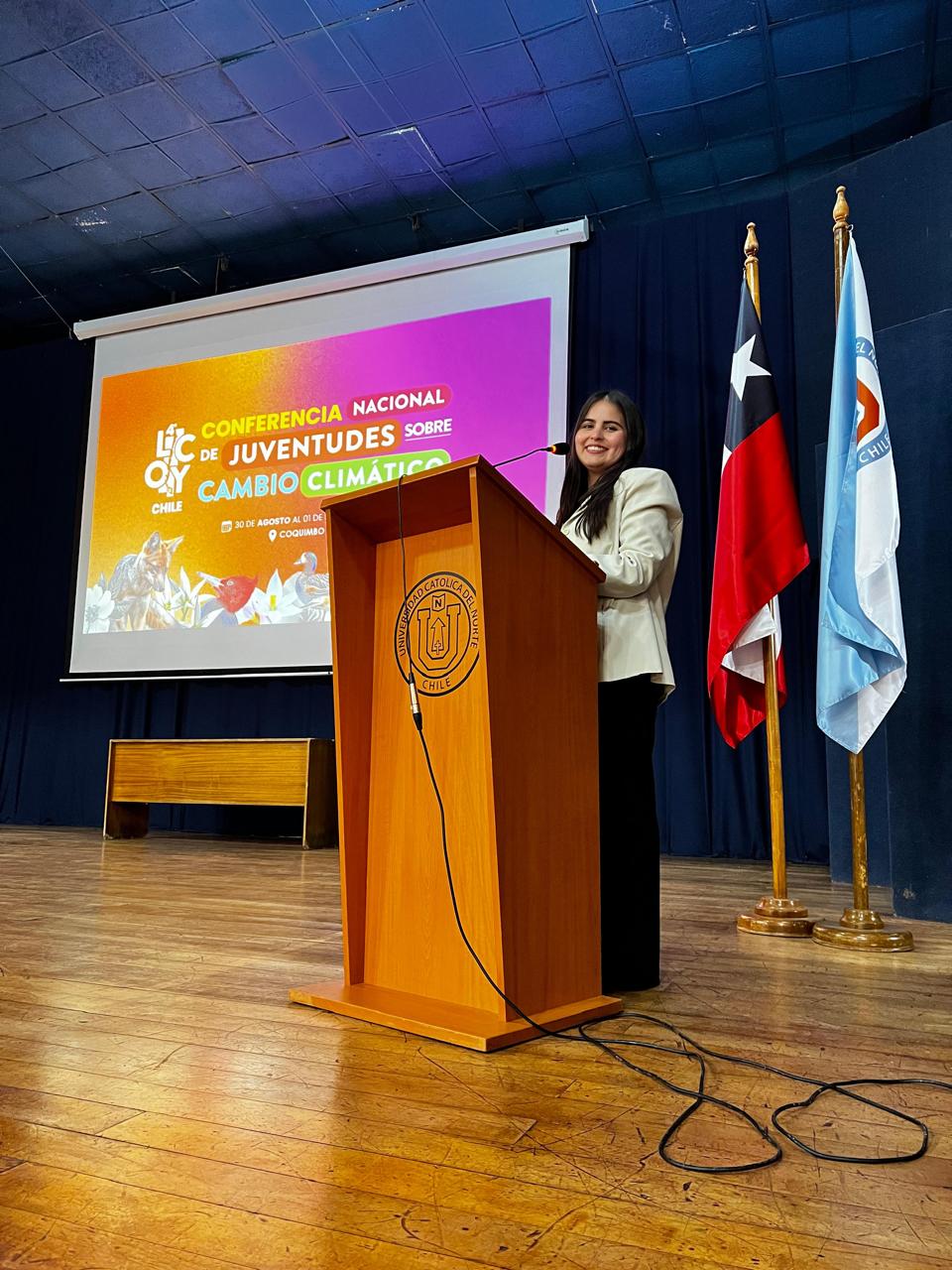
My research stay in Chile allowed me to conduct a field study on Climate Governance in Chile, aiming to contribute to more inclusive, participatory, and territorially grounded governance models. As a Chilean scholar, activist, and youth representative, my positionality – shaped by experiences as a scientist, teacher, and woman – provided a unique perspective on the subject.
The primary goal of this study was to explore how Chilean climate governance can evolve to become more inclusive and participatory. Three central research questions guided the work:
- Political and Social Dynamics: How do different actors negotiate and contest climate policies in Chile?
- Financialisation and Dependency: How are processes of financialisation and dependency embedded in climate governance frameworks and practices?
- Spatial Inequalities and Epistemic Pluralism: How do spatial inequalities, diverse knowledge systems, and local subjectivities challenge dominant governance models, and what alternative pathways do they offer?
These questions emerged from a desire to understand the underlying power structures and opportunities for transformation in Chile’s climate governance.
This research process was not just academic – it was deeply personal and transformative. As someone who has lived the realities of Chile’s climate governance, I witnessed firsthand how inequality, power imbalances, and epistemic hierarchies shape policy outcomes. Yet, I also saw the resilience and creativity of communities working to challenge these norms.
One of the most striking realizations was the power of situated knowledge. The diverse perspectives of stakeholders – from policymakers to grassroots activists – offered a rich tapestry of insights that could redefine climate governance in Chile. However, for these insights to translate into action, institutional change is necessary, particularly in how participation is structured and whose voices are prioritized.
This study underscores the need for climate governance in Chile to move beyond tokenistic participation and embrace genuine inclusivity. By acknowledging the diverse knowledge cultures and addressing power imbalances, governance models can become more responsive, adaptive, and equitable.
For me, this research – made possible by CuKnow through financial support – was a journey of discovery, reflection, and hope. It reinforced the idea that climate governance is not just about policies and frameworks – it is about people, their struggles, and their aspirations. As Chile continues to navigate its climate challenges, the insights from this study could serve as a foundation for building governance models that are rooted in justice, equity, and collaboration.
Resul Zoroglu – Research Stay at Boston College
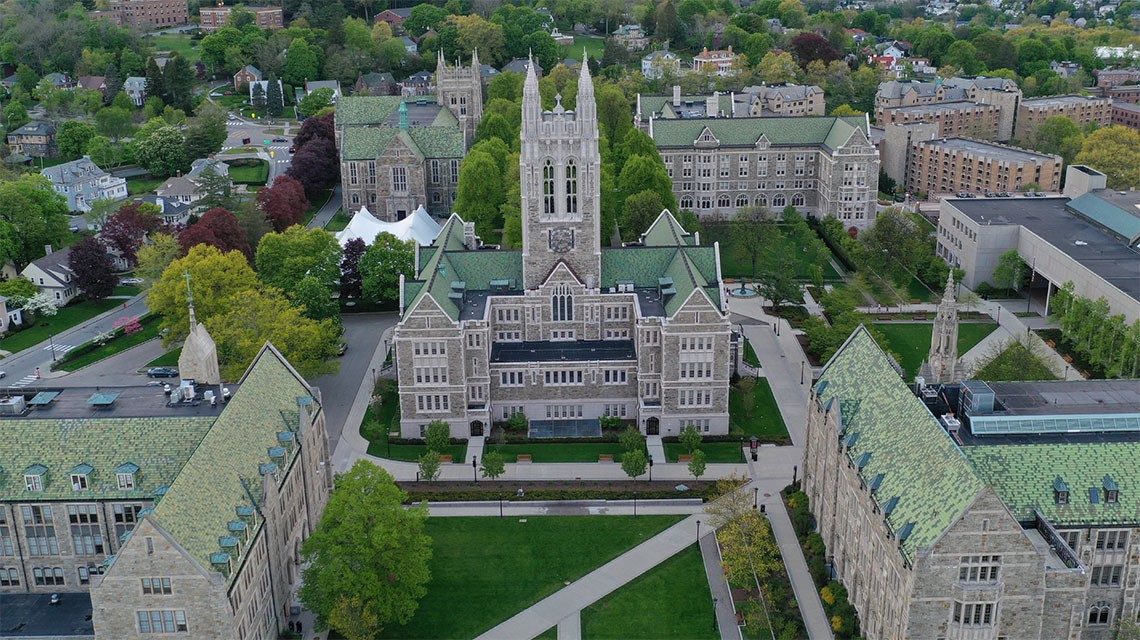

As part of his PhD in Economics, Resul Zoroglu spent seven months (2024/2025) at Boston College in the USA. His stay focused on academic exchange with leading experts in market and mechanism design, Professors Utku Ünver and Tayfun Sönmez. These scholars are renowned for their groundbreaking work on kidney exchange programs and the allocation of medical and educational resources.
Resul Zoroglu engaged in a vibrant research environment with over 60 international PhD students, participating in workshops, seminars, and receiving close mentorship. He also co-authored a paper with visiting researcher Cyril Rouault from Paris (Université Paris-Saclay).
Beyond academics, Resul Zoroglu explored the cultural diversity of the U.S., including travel along the East Coast and a camper trip through western national parks. The experience was both personally and academically enriching, expanding his network and research perspectives.
Inspired by a 2017 seminar at the University of Mannheim, Resul Zoroglu fulfilled a long-held dream of working with Professors Ünver and Sönmez—demonstrating that one can reach the international research elite despite challenging beginnings and without an academic background.