
CuKnow Principal Investigators (PIs)
Technological dimension
|
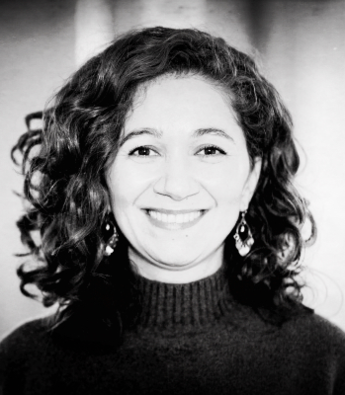
Prof. Dr.-Ing. Sanja Lazarova-Molnar
Professor at the Institute of Applied Informatics and Formal Description Methods (AIFB) |
Knowledge is a living phenomenon that evolves with technological and societal progress. In today's world, the abundance of data has the potential to profoundly impact and change our knowledge culture. More importantly, the amalgamation of data with human knowledge opens up new ways of understanding the world and accessing previously inaccessible insights. My main interest is in exploring this amalgamation and its potential impact on our knowledge culture. |
|
|
Prof. Dr.-Ing. Gisela Lanza |
For me, knowledge represent the basis for global innovation. They influence international research results, which need to be combined and translated into applicable output to solve our current and future challenges such as sustainable energy or mobility on a global but also local level at the same time. |
Institutional dimension
 |
Prof. Dr. Darko Jekauc
|
To me, cross-utilizing knowledge means cross-disciplinary collaboration, learning from each other, and doing research together. |
 |
Prof. Dr. Ingrid Ott
Chair of Economic Policy (ECON) |
Knowledge increases when it is shared. And even supposedly useless knowledge is valuable. The implications are clear: We must ensure that we create the right framework conditions for knowledge to emerge and be shared unconditionally. This is essential for ensuring lasting prosperity. |
 |
Professor for Finance and Banking (FBV) |
For new insights into economic and social contexts, I need "new eyes". The CuKnow diversity enables this new kind of view. |
 |
Professor of School Pedagogy (ISD) |
The view beyond one's own discipline, the presentation of individual questions within one's own discipline also for people outside one's own discipline, the discussions that are initiated and the increase in knowledge that is stimulated as a result, as well as research questions that arise together, are central for me to bring us all forward as researchers and to grow - also personally. All this is made possible by the meeting in CuKnow, which connects all scientists for their benefit. |
Societal dimension
 |
Professor of Sociology at KIT (ITZ-Sociology) and |
Ever since the Corona crisis, we know that there is only one reality, but often very different views on what is true. How can it be that societies that invest enormous resources in science and quickly communicate and debate its results nevertheless disintegrate into subgroups that cannot agree even on basic statements? What influence do social networks have on the Internet? Do social bots really have effects? How could digital communication and public debate be organized to reduce the spread of fake news and the polarization of opinions? |
|
|
Professor of science communication (ITZ-WMK) |
How knowledge is dealt with in public, how decisions are justified with the help of (non-) knowledge, and how public discourse about knowledge proceeds, and sometimes also tips over - these are aspects of knowledge that are studied at my chair. |
 |
Prof. Dr. Dr. Rafaela Hillerbrand
Head of Research group “Philosophy of Engineering, Technology Assessment, and Science” at Institute for Technology Assessment and Systems Analysis (ITAS) and Spokesperson of the Academy for Responsible Research, Teaching, and Innovation (ARRTI) |
As a physicist and a philosopher of science and technology, I study the different forms of knowledge on a metalevel. Together with my research group, PhilETAS, we try to understand how models can enhance understanding or explanation in different scientific disciplines, engineering practices, or via tools like computer simulations, big data analysis, or machine learning. As head of ARRTI, the KIT Academy for Responsible Research, Teaching, and Innovation, I am also interested in how different cultures of knowledge incorporate responsibility for their research practices and their findings. |
 |
Chair and Head of the Institute for Entrepreneurship, Technology Management and Innovation (EnTechnon)
|
Entrepreneurial activity leads to new products and services from information on society, the environment and technology. In this context, cultures of knowledge are key to responsibly contributing to value creation and innovation. |
|
Chair for the history of technology, head Department of History, dean of studies Europäische Kultur und Ideengeschichte (ITZ-History) |
In the history of technology as my main field of research, the concept of CuKnow is very helpful to overcome simplifying dichotomies: Compared to the common juxtaposition of practical versus theoretical knowledge only, it allows a much more fine-grained analysis of various forms of technical knowledge in their historical dimension – covering, not the least, the knowledge of users dealing with technology as well. |
|
|
Professor at the Institute of Art History (IKB) |
My work uses material images as well as image motifs wandering through time and space in order to capture the change and transfer of image concepts. Looking at the history of (pictorial) ideas, I am concerned with the diverse processes of formation, transmission and application of image knowledge in the making. |
|
|
Professor of Applied Philosophy (ITZ-Philosophy) |
I find the co-operative production of knowledge a worthwhile research topic. How do contributors in joint intellectual projects form beliefs about their respective roles and claims to authorship? What are the inner workings of different forms of intellectual co-operation? There are many fascinating questions here. For instance, we have strong reason to assume that women contributed more to many “cultures of knowledge” than they are credited for. Can we correct this bias? |

Spatial dimension
 |
TT-Prof. Dr. Franziska Meinherz
Professorship for urban and mobility geograph (IFGG) |
My research focusses on the interface between urban transformations and (un)sustainable mobility patterns. I am interested in how urban mobility practices are embedded in people's everyday lives and in the configuration of urban spaces, and in how social inequalities produce differentiated accesses to pleasurable and low-carbon mobilities. I am also interested in the institutional processes that accompany the design and implementation of urban mobility policies. |
 |
Professor of Regional Studies and Director of the Institute for Regional Studies (IFR) |
In the graduate school CuKnow, I am interested in international perspectives and critiques of the concept of sustainability. International critiques and extensions of the concept of sustainability have been presented from different perspectives. If these international perspectives are integrated, the acceptance of the concept on a global level can be increased. |
 |
Prof. Dr. Jan Cermak |
Climate research looks at changes in the framework conditions of human activity. Communication, social classification and interpretation of these scientific findings are major interdisciplinary challenges. |
 |
Head of Research Group “Designing Real-World Laboratory Research” at the Institute for Technology Assessment and Systems Analysis (ITAS) |
In transdisciplinary research, differentiating and integrating different forms of knowledge is central to both making action-oriented contributions to dealing with societal problems and generating new scientific knowledge. For a corresponding co-production and re-integration of knowledge, CuKnow is a fascinating platform to enable inter- and transdisciplinary collaboration |