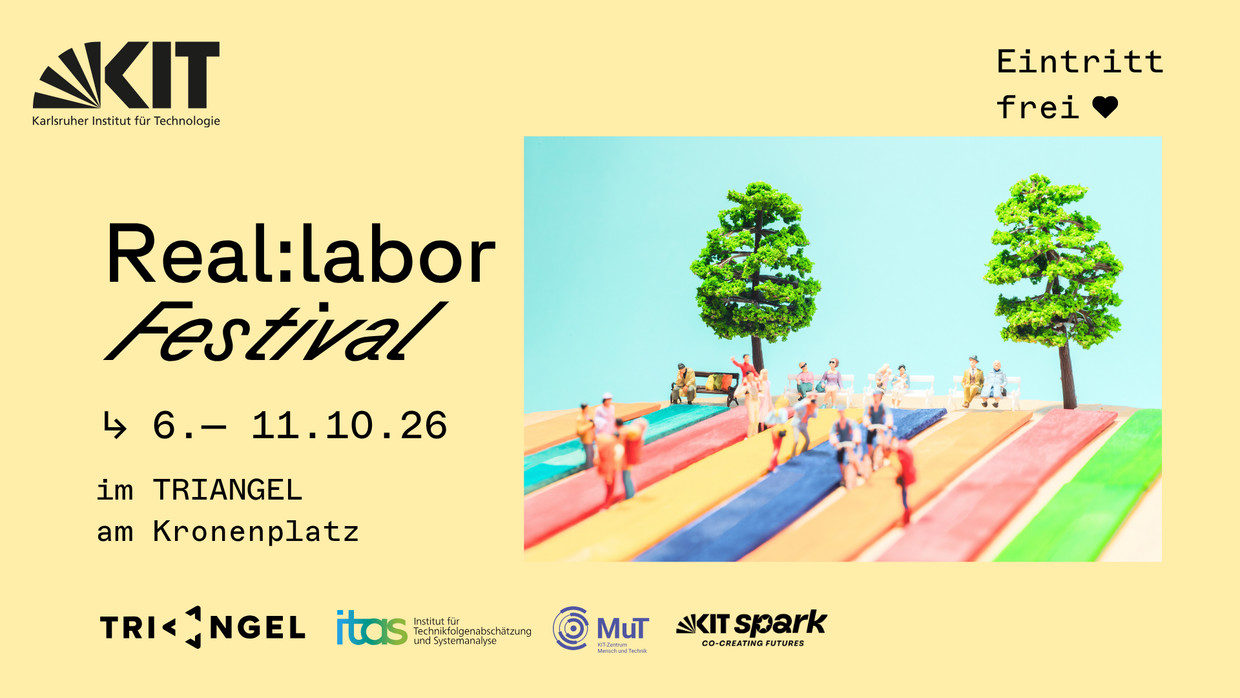
REAL:LABOR FESTIVAL 3.0
The Real:labor Festival 3.0 Stadt.Gestaltung.Erfahrbar.Machen brought together science and society from October 6 to 11, 2026, to discuss new approaches to creating a city that is both sustainable and future-proof. For the third time, the festival provided insights into the work of reality labs and demonstrated how research can trigger concrete processes of change on the ground. This year, all KIT reality labs were represented at Kronenplatz.
Have a Closer Look


Everything That Happened in Six Days
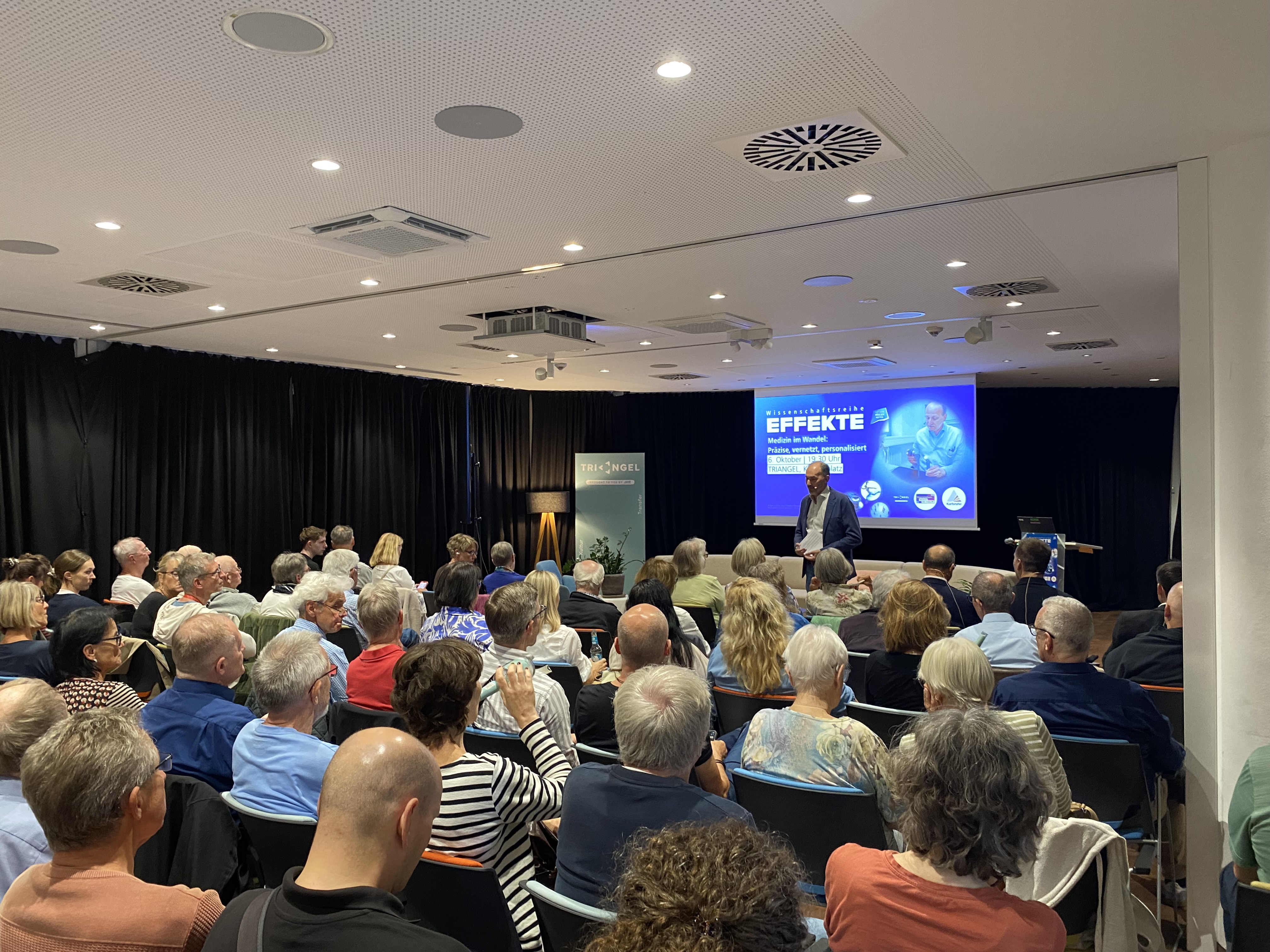
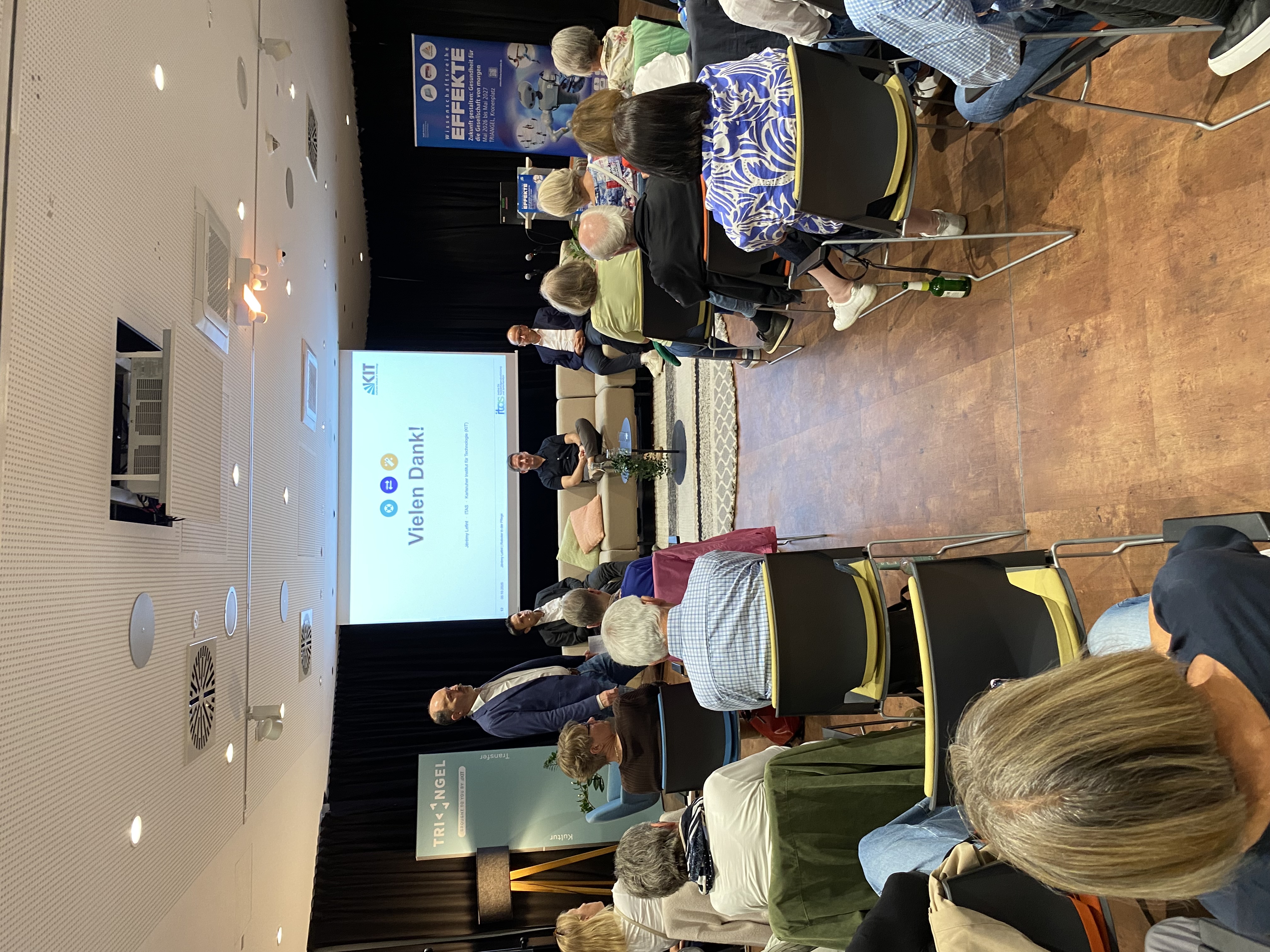
The EFFEKTE-Reihe kicked off in the evening with “Medicine in Transition: Precise, Connected, Personalized.” The lecture focused on the use of artificial intelligence and robotics in healthcare, modern techniques in joint replacement surgery, and personalized rehabilitation. Among the speakers was our MuT spokesperson, Prof. Dr. Darko Jekauc, from the Institute of Sports and Sports Science (IfSS), who presented his research project INNOVARE.
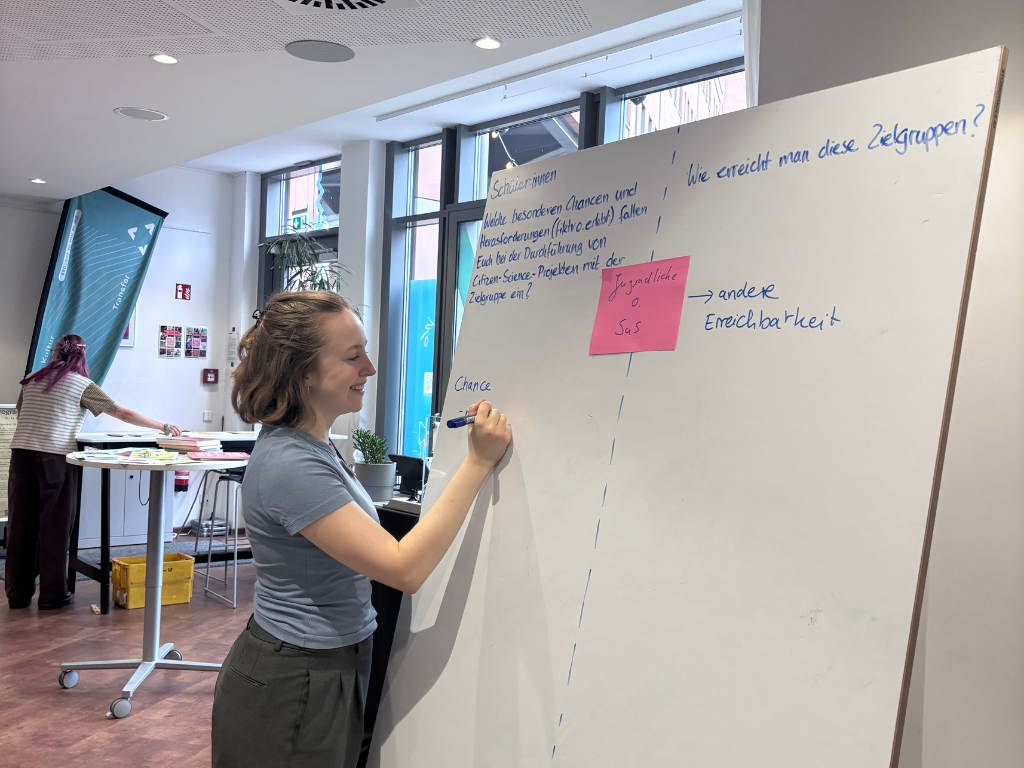
The design of future cities was also a key focus: At MuT2Go, SaeBom Song, a member of the CuKnow graduate school, spoke about smart cities, technological developments, and how these influence urban transformation and social power dynamics. At the Citizen Science MEET UP, participants discussed the opportunities and challenges of citizen science projects with young people.
A major highlight was the opening of KIT spark – co-creating futures, which, with a celebratory spark, paved the way for a new space for collaborative research between science and society. On Saturday, interested visitors also had the opportunity to learn about KIT’s reality labs in an exhibition and try out projects on site.
During the Late-Night-Show “STULLE – wissenschaftlich belegt,” Prof. Dr. Daniel Lang (MuT spokesperson from the Institute for Technology Assessment and Systems Analysis ITAS) and Prof. Dr. Kathrin Gerling shared insights into their research on sustainability, reality labs, and accessibility.
Six days full of new perspectives, exciting conversations, and ideas are now behind us. A big thank you to everyone involved who made the Real:labor Festival 3.0 possible through their contributions, their time, and their dedication. We’re taking many new ideas with us and are eager to see what projects and connections will emerge from them.

The Real:labor Festival 3.0 was developed in collaboration with TRIANGEL Transfer | Kultur | Raum, the Institute for Technology Assessment and Systems Analysis (ITAS), and KIT spark.
Our MuT-Program-Highlights
- 06.10.2026: EFFEKTE-Reihe „Medizin im Wandel: Präzise, vernetzt, personalisiert“ with our MuT spokesman Prof. Dr. Darko Jekauc
- 07.10.2026: Our Coffee Lecture MuT2Go with SaeBom Song
- 08.10.2026: Citizen Science MEET UP
- 10.10.2026: KIT spark Join now! – First day after the opening
- 10.10.2026: Late-Night-Show „STULLE – wissenschaftlich belegt“ with our MuT spokesman Prof. Dr. Daniel J. Lang