
EFFEKTE in June: Research Meets Everyday Life
↵
How can we make our everyday lives healthier and more sustainable and become part of research ourselves? In its June issue, the EFFEKTE series invites you to experience scientific topics first-hand, get active yourself and discover your own surroundings with curiosity.
In concrete terms, this means: Which plants and animals live in our city and how can we discover them? How can legumes be integrated into our everyday lives in a healthy and sustainable way? And why is cycling so good for body and mind?
- Tuesday, 9. June
- The event starts at 19:30
- TRIANGEL Transfer I Kultur I Raum at Kronenplatz.
- Free admission
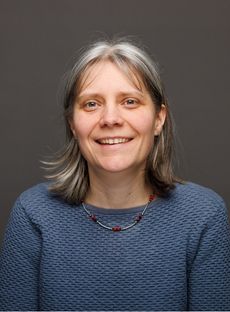
Diversity on our doorstep: BioBlitz Karlsruhe
What actually grows, crawls and flies right on our doorstep? At BioBlitz Karlsruhe, citizens discover the city's biodiversity together - supported by smartphones and artificial intelligence. Dr. Judith Bieberich, botanist and head of the "Species Knowledge for All" project at the State Museum of Natural History Karlsruhe, provides exciting insights into the BioBlitz project, which she initiated together with the KIT Humans and Technology Center (MuT). Her focus is on urban plant diversity and the question of how species knowledge can be communicated in a new way today. She also explains how citizen science apps, data and AI support biodiversity research and where their limits lie.
Cleaner air through citizen participation: CycleSense
The CycleSense research initiative uses mobile sensor technology on bicycles to record particulate pollution in Karlsruhe more precisely. Felix Hörner and Michel Weber from CycleSense show how the data obtained provides important information on health risks and helps to develop targeted measures for a healthier city. By actively involving citizens, CycleSense combines science and community in a practical way - a central contribution to the EFFEKTE lead topic "Health for the society of tomorrow".
Cycling: Healthy for body, mind and city
In addition to environmentally friendly mobility, regular cycling has a demonstrably positive effect on health – both physically and mentally. Studies show that cyclists have a lower risk of stress, depression and anxiety and are generally happier. Prof. Dr. Claudia Hille, Professor of Cycling at Karlsruhe University of Applied Sciences (HKA), will highlight the many positive effects of cycling in her lecture. She will also discuss the obstacles that prevent many people from cycling every day and how more people can be encouraged to use bicycles as a means of transportation.
Legumes 2.0 – healthy & sustainability
Under the motto "Pulses 2.0", Dr. Stephanie Seifert and Julia Renz from the Max Rubner Institute (MRI ) will explain the potential of pulses such as peas, beans and lentils for a healthy diet. They will not only discuss their health effects, but also new, processed legume products such as lentil pasta and their health benefits. Participants can learn how to prepare new recipes and try them out for themselves in the ongoing TILL study. At the MRI information stand, tastings and information on participating in the study will be available.
The EFFEKTE science series is organized by the Science Office of the Economic Development Agency of the City of Karlsruhe. Once a month on "Science Tuesday", Karlsruhe university and research institutions present themselves and provide insights into their research.
The lecture series is based on the theme of the Federal Ministry of Research, Technology and Space's Science Year 2026 ("Medicine of the Future").
Further information on the EFFEKTE science series can be found at www.effekte-karlsruhe.de.