
International exchange on digitalization, AI and it´s impact on well-being at work with Prof. Dr. Oğuz Başol
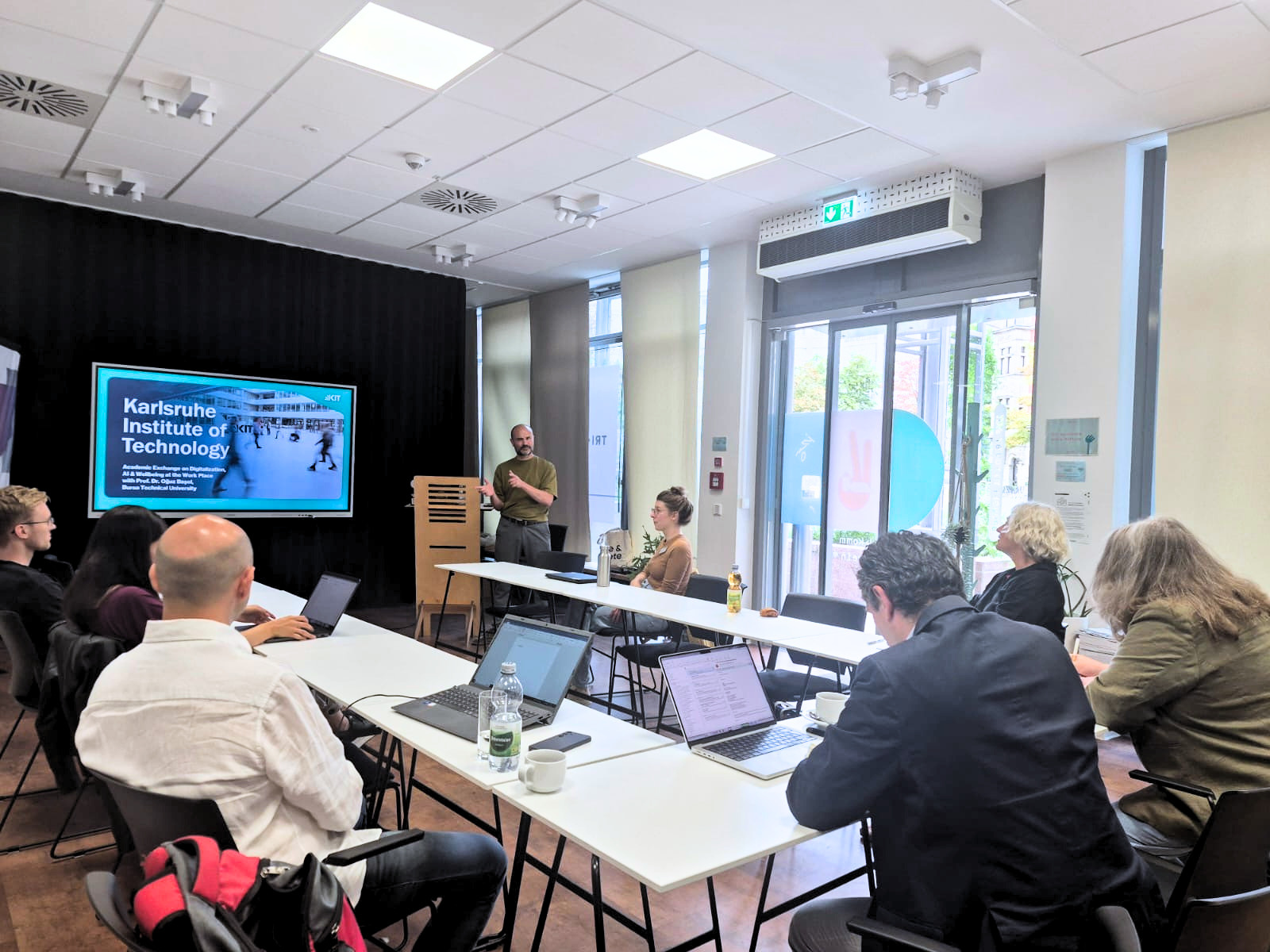
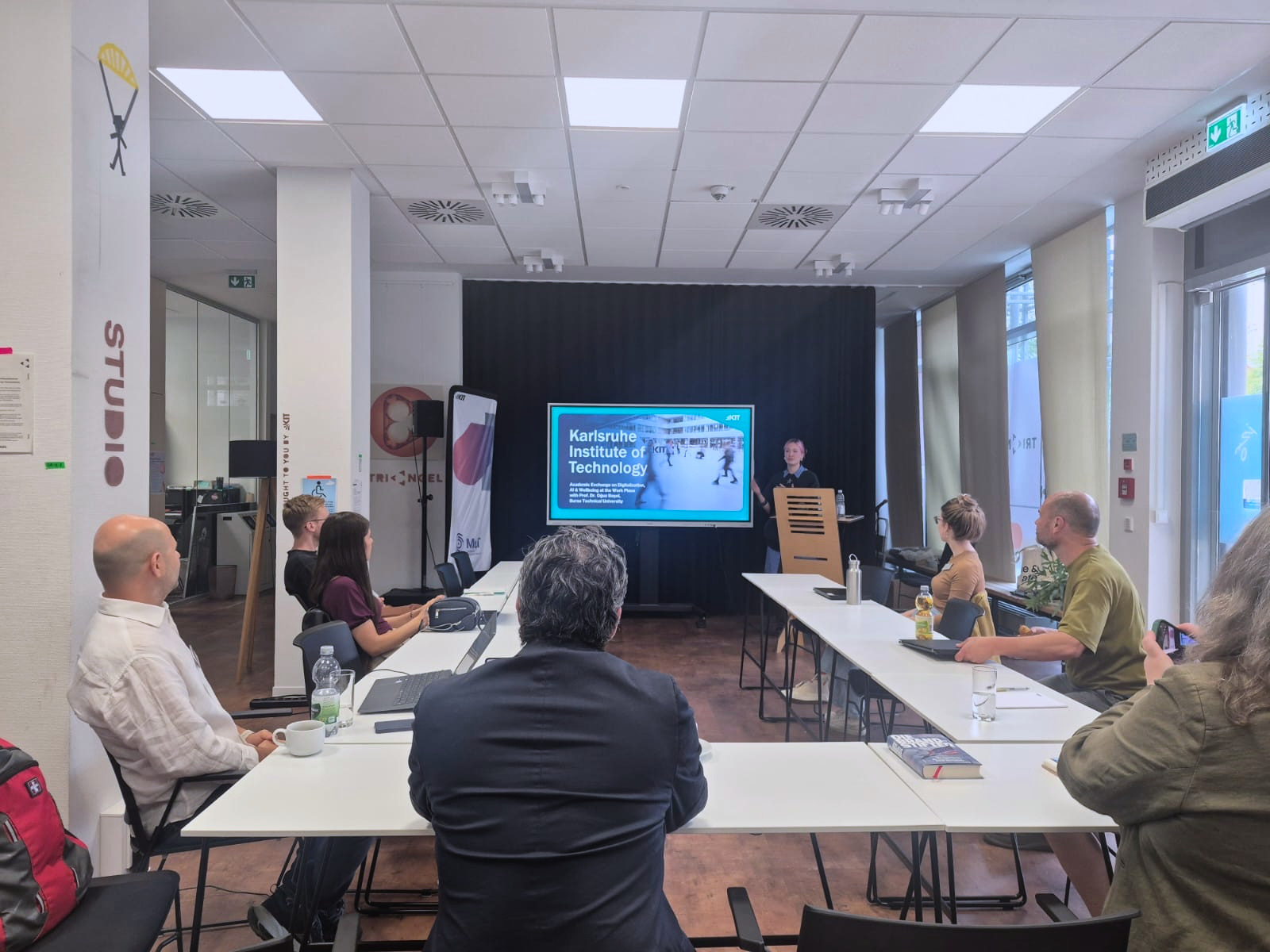
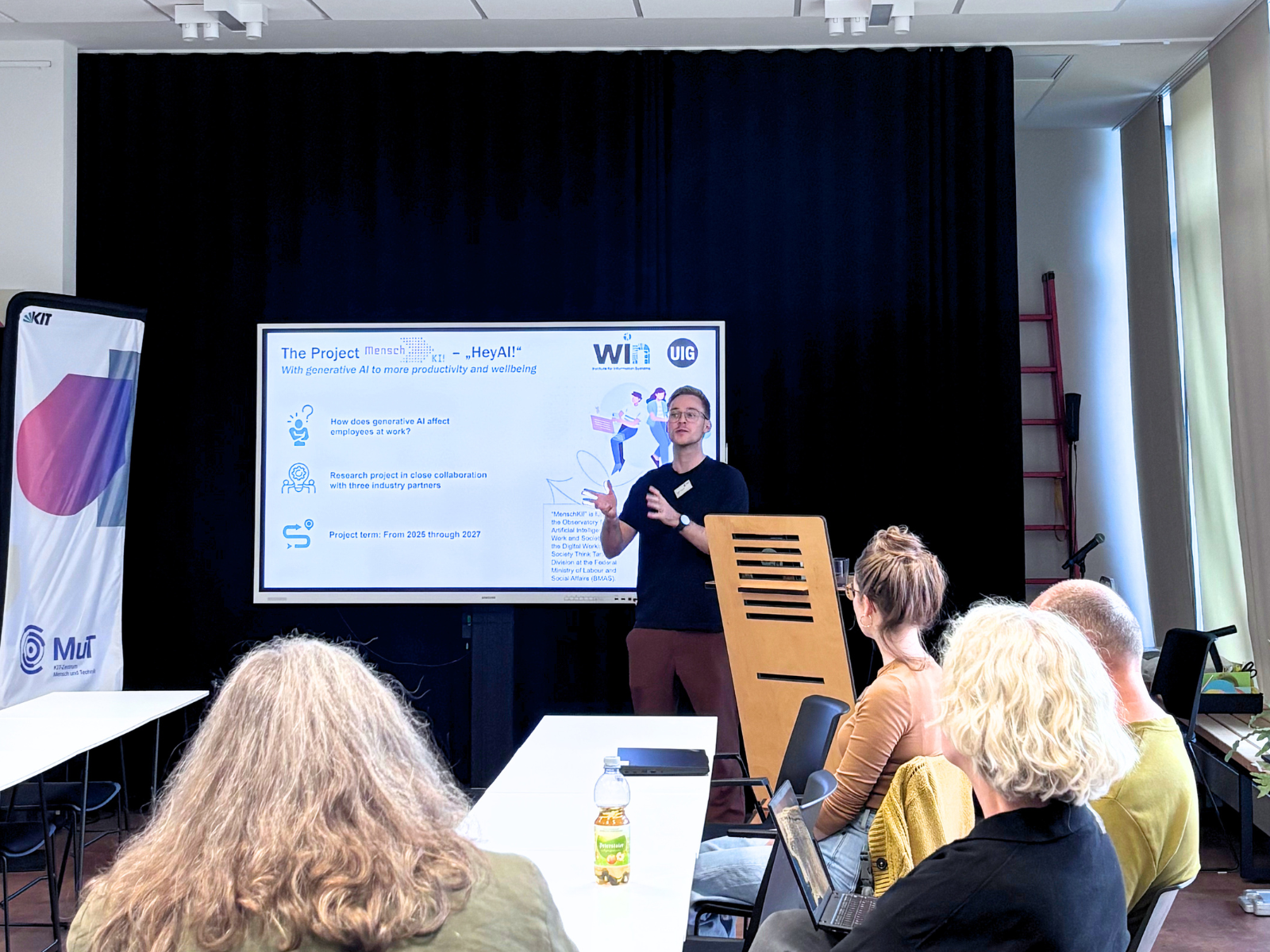
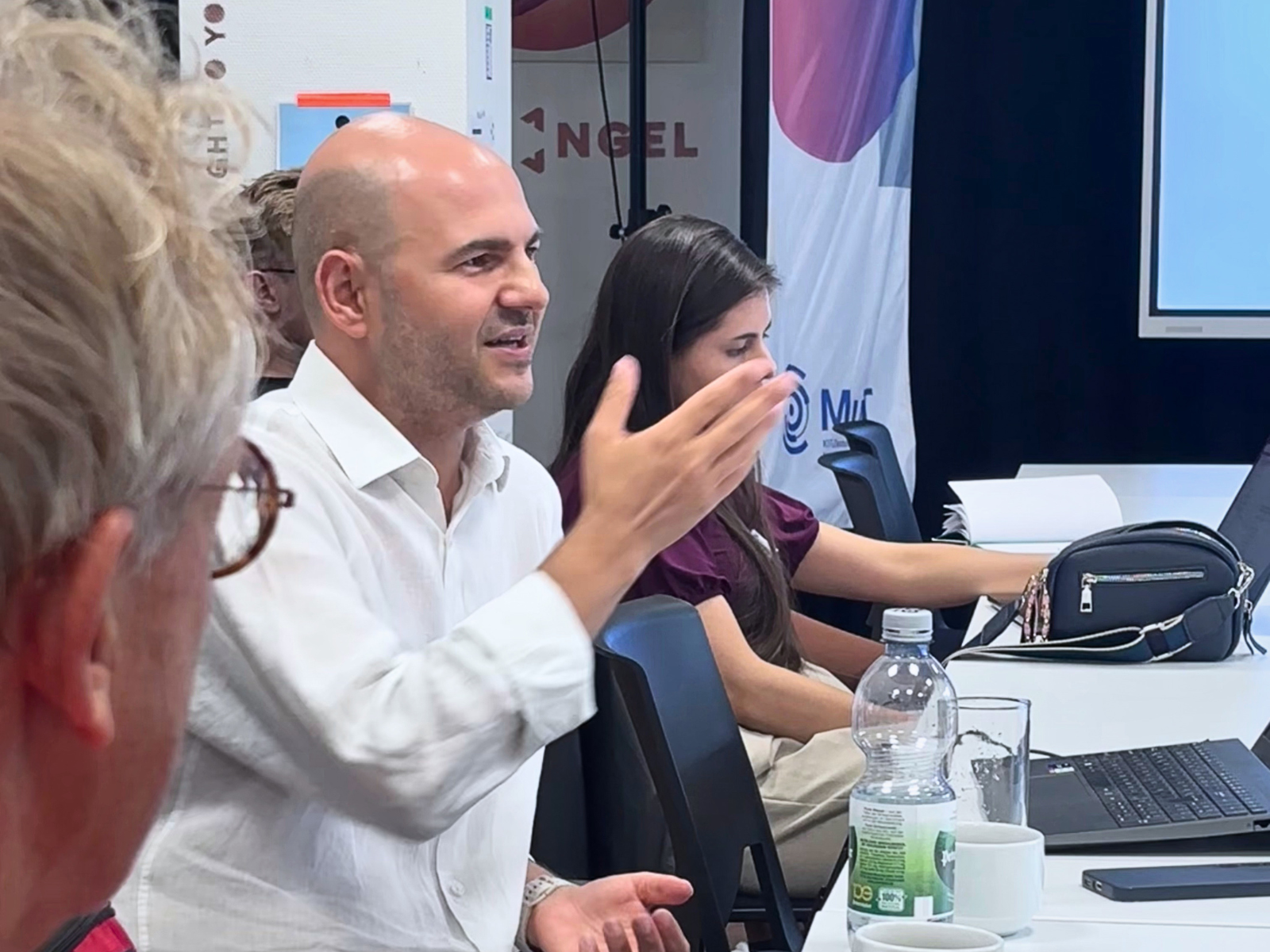
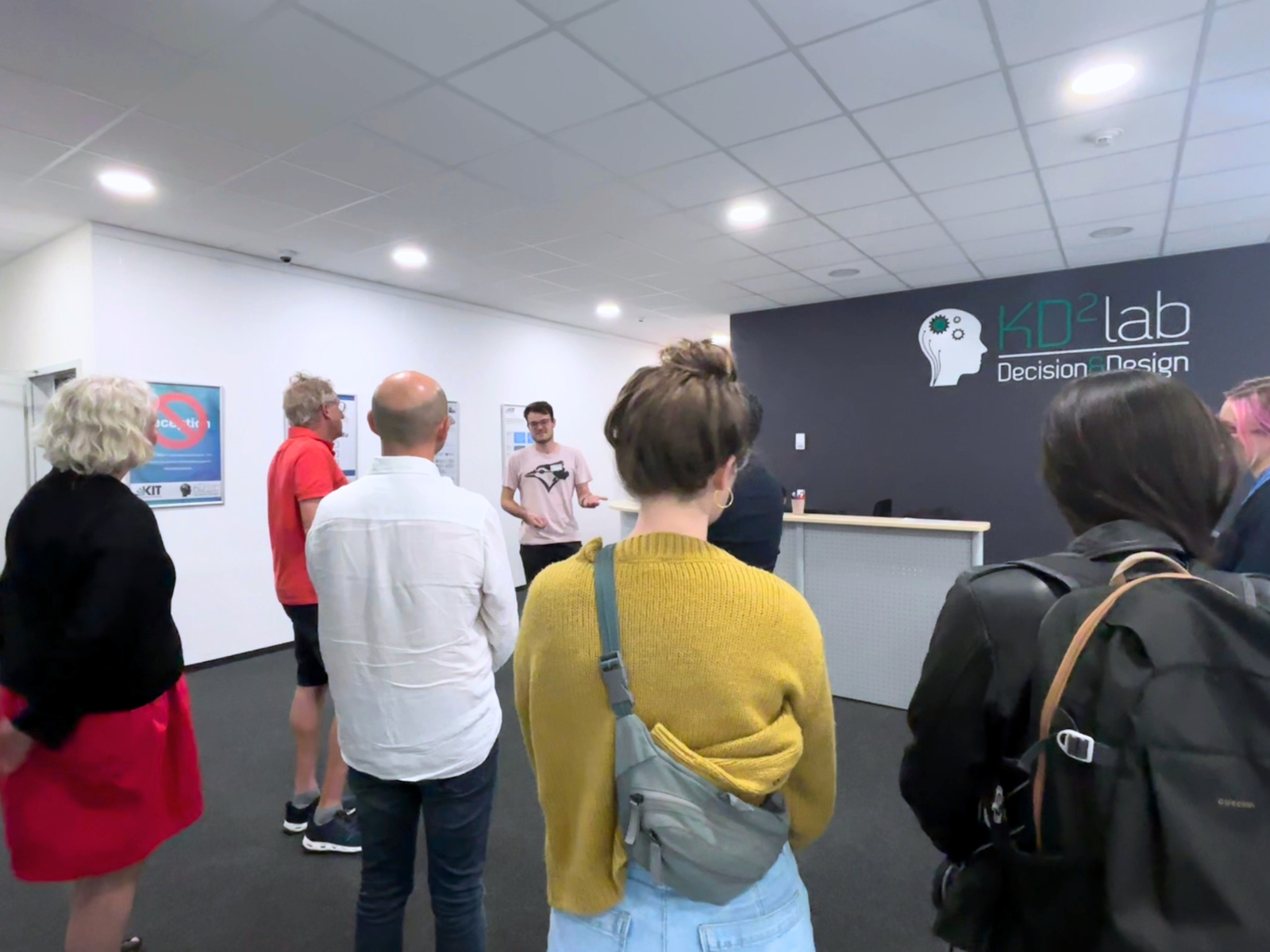

On Monday, August 24, 2026, Prof. Dr. Oğuz Başol visited the KIT Humans and Technology Center to discuss opportunities for continuing his research at KIT. His work to date has focused on the psychosocial impacts of digitalization, particularly remote work stress, employee well-being, and the “Fear of Becoming Obsolete” (FOBO) in the age of artificial intelligence. The discussion included members of the MuT network from various disciplines, among them MuT spokesperson Prof. Dr. Daniel Lang, Prof. Dr. Alexander Woll, Dr. Bettina-Johanna Krings, Thimo Schulz, and members of the CuKnow graduate school. Oliver Schmidt, head of International Cooperation and Projects, also welcomed Prof. Başol and presented opportunities for international collaboration.
Joint Research Prospects
Prof. Dr. Oğuz Başol presented his research project, which he hopes to continue at KIT in the future. The project aims to integrate objective biometric data and the AI-induced Fear Of Becoming Obsolete (FOBO) into models of remote work stress. In addition, the research will examine, among other things, whether the Remote Work Stress Scale is a reliable psychometric instrument in the German-speaking context.
Insights into Research and Networking at KIT
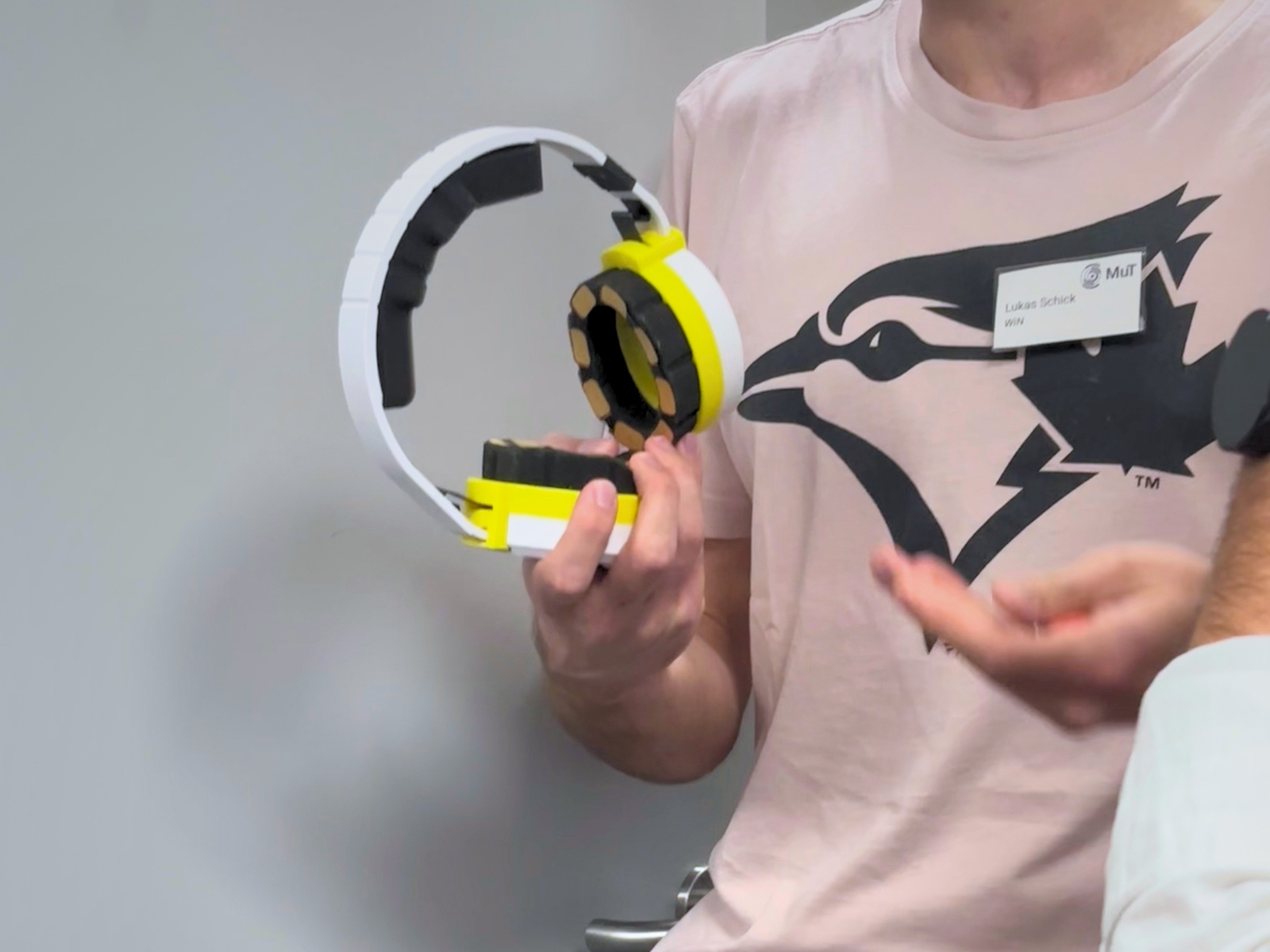
In addition, participants gained insights into the research conducted at the KD2Lab and got a first impression of KIT spark, which is set to open in October 2026 and, as part of KIT Science City at Kronenplatz, will provide spaces for society-oriented research—ranging from reality labs to citizen science projects. In the Sustainable Futures Lab (SFL), for example, virtual future scenarios can be explored and brought to life.
The visit thus provided valuable impetus for international exchange and opened up new perspectives for potential future networking and collaboration in the divisions of health behavior and well-being.